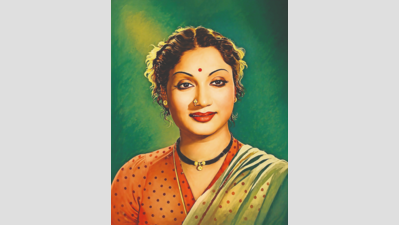
G Varalakshmi didn’t just act—she disrupted. In an era when female roles were confined to passive devotion or decorative grace, she stormed onto screens with a swagger that felt dangerous, real, and utterly magnetic. Her performances weren’t performances—they were declarations. A rowdy energy pulsed through her every gesture, challenging the sanitized ideals of femininity propagated by early South Indian cinema. She wasn’t the dutiful daughter or the weeping lover. She was the woman who lit a cigarette, stared down the patriarch, and walked away without looking back.
And she did it long before rebellion became a marketable image.
The Making of a Rebel: Who Was G Varalakshmi?
Born in the early 20th century—exact records remain hazy—G Varalakshmi emerged during the formative years of Indian talkies. Her background, much like her persona, defied social templates. Unlike many actresses of her time who came from theatrical families or conservative middle-class upbringings, Varalakshmi’s path was unconventional. She reportedly began in stage plays, where her unfiltered energy earned both admiration and criticism.
Her entry into cinema wasn’t through nepotism or social privilege. It was through sheer force of presence. Directors noticed her not because she fit the mold, but because she shattered it. When she spoke, audiences leaned in. When she moved, the camera followed—often out of instinct, not direction.
Her breakthrough came in the 1940s with films like Vara Vikrayam (1939), a socially charged story criticizing the dowry system. Here, she didn’t play a victim—she played resistance. Her character wasn’t pleading for justice; she was demanding it. That distinction defined her career.
Redefining Femininity in Early South Indian Cinema By the 1940s and 50s, Indian cinema was still negotiating the boundaries of female expression. Women on screen were either goddesses or sinners—with little room for complexity. G Varalakshmi refused that binary.
She played characters who were politically aware, sexually autonomous, and morally ambiguous. In Kanyasulkam (1955), a landmark adaptation of the Telugu play, she embodied a sharp-tongued, socially aware woman who mocked outdated customs with biting sarcasm. Her delivery wasn’t theatrical—it felt like conversation overheard in a real household. That authenticity unnerved traditionalists but resonated with audiences hungry for realism.
What set her apart wasn’t just her roles, but her demeanor. She didn’t rely on melodrama. Her power came from stillness, from the flicker of an eyebrow, the pause before a retort. She didn’t need to scream to be heard.
The "Rowdy" Label: Reclaiming the Narrative
The press of her time often described her as “rowdy”—a word loaded with judgment, especially when applied to women. But in calling her rowdy, they accidentally revealed her power. To disrupt polite society, to challenge authority, to speak without permission—those are rowdy acts.
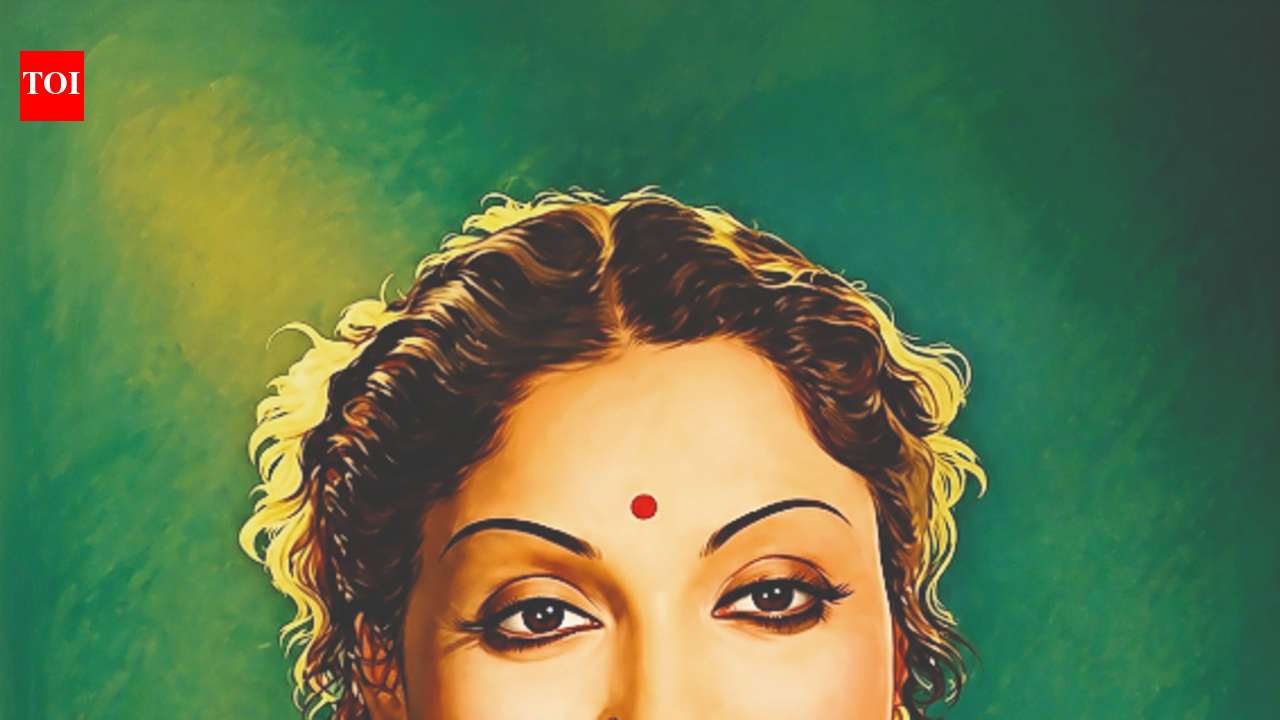
Varalakshmi owned the label. She didn’t apologize for her boldness, her smoking, or her refusal to perform demureness. In interviews, she was direct, witty, and unafraid to critique the industry’s double standards. While male stars were celebrated for their “rebellious charm,” female actors like her were framed as problematic.
Yet, that friction became her signature. She wasn’t trying to be likable. She was trying to be truthful.
Breaking Barriers Beyond Acting
Varalakshmi’s influence extended beyond performance. She was among the first South Indian actresses to take control of her image and career trajectory. At a time when studios dictated everything from roles to personal conduct, she negotiated contracts, chose scripts, and even produced a few projects.
She understood the politics of visibility. While contemporaries were photographed in traditional attire, she was often seen in Western clothes—suits, trousers, tailored shirts. This wasn’t fashion—it was ideology. Each outfit was a quiet protest against enforced femininity.
She also used her platform for activism. She publicly opposed caste discrimination and supported women’s education. In a 1952 speech in Madras, she said: “An actress is not a commodity. She is a citizen with a voice. If I’m loud, it’s because the silence was killing me.” That line encapsulates her entire legacy.
Signature Roles That Challenged Convention
What made her performances iconic wasn’t just the content—but the context. Consider these standout roles:
- In Mala Pilla (1938): She played a village girl who educates herself and confronts caste oppression. Radical for its time, the film was banned in several districts. Varalakshmi’s performance—raw, urgent, unsentimental—became a blueprint for socially conscious acting.
- In Bhakta Potana (1942): While the film centered on a male saint, Varalakshmi stole scenes as a skeptical woman questioning blind devotion. Her character wasn’t anti-religion—she was pro-reason. Rare and risky in devotional cinema.
- In Kanyasulkam (1955): Her portrayal of a widowed woman running a matchmaking racket was both comedic and scathing. She mocked the hypocrisy of a society that commodified women while pretending to revere them.
These weren’t token roles. They were narrative pivots. Directors began writing stronger female characters because audiences responded to her authenticity.
Why She Was Overshadowed—And Why She Matters Now
Despite her impact, G Varalakshmi’s name faded from mainstream memory. Unlike actresses who built dynasties or transitioned into politics, she didn’t leave behind a family brand. And because many of her films were lost or poorly archived, new generations had little access to her work.
There’s also the gendered erasure common in film history. Male pioneers are celebrated; female rebels are remembered as “controversial” or “difficult.” The industry canonized the polite, the pious, the palatable—leaving little room for the rowdy.
But today, as conversations around representation, agency, and feminist legacy deepen, her relevance surges. Young filmmakers cite her as an influence. Film scholars analyze her performances as early examples of intersectional resistance. Her career is being reevaluated not as an anomaly, but as a blueprint.
The Legacy of Authenticity
G Varalakshmi’s greatest contribution wasn’t a single film or award. It was the permission she gave—unintentionally, perhaps—to be real.
Actresses today who play flawed, assertive, or unapologetically angry women stand on ground she helped break. When a character speaks truth to power without being punished for it, that’s Varalakshmi’s echo.

Her legacy teaches that rebellion in art isn’t about shock value—it’s about honesty. It’s about refusing to shrink. It’s about holding the camera’s gaze and saying, This is me. Deal with it.
She didn’t wait for the industry to catch up. She charged ahead—and left footprints worth following.
How to Discover Her Work Today
Finding G Varalakshmi’s films requires effort, but it’s rewarding. Here’s how to start:
- Check the National Film Archive of India (NFAI) – They’ve restored Kanyasulkam and Mala Pilla. Access may require research credentials or special screenings.
- South Indian film festivals – Events like the Chennai International Film Festival occasionally feature retrospectives on early feminist figures in cinema.
- Telugu and Tamil film history books – Look for academic works by scholars like S. Theodore Baskaran or N. Chitrakala. They often reference her contributions.
- University film departments – Some institutions in Andhra Pradesh and Tamil Nadu maintain rare reels or stills from her era.
- YouTube and niche archives – Search for clips with original Telugu or Tamil titles. Subtitled versions are rare but emerging.
Engage critically. Watch not just for performance, but for cultural subtext. Notice how she occupies space, how she uses silence, how she refuses victimhood.
Final Take: Why G Varalakshmi Still Steals the Show
G Varalakshmi wasn’t just ahead of her time—she was outside its constraints. She didn’t seek approval. She didn’t conform. And she didn’t fade quietly.
Her story is a reminder that progress in art often comes from those who are dismissed as “too much.” Too bold. Too loud. Too real.
For anyone tired of sanitized narratives, for anyone creating against the grain, for anyone who’s been called “rowdy” for speaking up—watch her films. Study her choices. Absorb her courage.
Rebellion has many faces. Hers wore eyeliner and a smirk.
FAQ
Who was G Varalakshmi? G Varalakshmi was a pioneering South Indian actress known for her bold performances and defiance of traditional gender roles in 1940s and 50s cinema.
Why is she called the “rowdy actress”? The label was used by critics to describe her unapologetic demeanor, outspoken nature, and refusal to conform to societal expectations of femininity.
What are some of her most famous films? Key films include Mala Pilla (1938), Bhakta Potana (1942), and Kanyasulkam (1955), all noted for their social commentary and strong female roles.
Did G Varalakshmi face backlash for her roles? Yes—her performances often challenged caste norms and patriarchal values, leading to censorship, public criticism, and bans in conservative regions.
Are her films available to watch today? Some have been restored by archives like NFAI, and clips or full versions occasionally surface in academic screenings or regional film festivals.
How did she influence modern Indian cinema? She paved the way for complex, autonomous female characters and inspired future generations of actors to embrace authenticity over tradition.
Was she involved in activism? Yes—she advocated for women’s education, caste equality, and artist rights, often using public speeches and interviews to voice her views.
FAQ
What should you look for in G Varalakshmi: The Rebel Actress Who Redefined Stardom? Focus on relevance, practical value, and how well the solution matches real user intent.
Is G Varalakshmi: The Rebel Actress Who Redefined Stardom suitable for beginners? That depends on the workflow, but a clear step-by-step approach usually makes it easier to start.
How do you compare options around G Varalakshmi: The Rebel Actress Who Redefined Stardom? Compare features, trust signals, limitations, pricing, and ease of implementation.
What mistakes should you avoid? Avoid generic choices, weak validation, and decisions based only on marketing claims.
What is the next best step? Shortlist the most relevant options, validate them quickly, and refine from real-world results.